Santa Ana Winds San Clemente Windows
Quick Answer: Do Santa Ana winds damage windows in San Clemente?
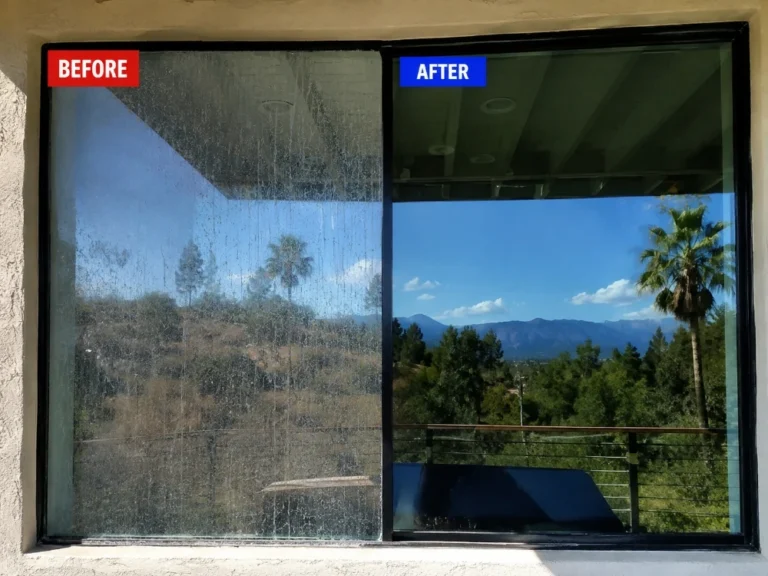
Yes. Santa Ana winds deposit ash, desert dust, and dried pollen on glass at 30–70 mph. San Clemente sits at the mouth of Ortega Canyon — one of the worst Santa Ana corridors in South OC. Ash from even distant fires is mildly acidic: when marine layer moisture returns, it rehydrates the ash on your glass and begins etching the surface. Post-Santa-Ana cleaning is protective maintenance, not cosmetic. Most damage occurs on inland-facing windows — not ocean-facing — which surprises most homeowners.
Most San Clemente homeowners think about salt film when protecting their windows. They should also think about Santa Ana winds — and they should think about them differently than their neighbours in Laguna Beach or Dana Point do.
San Clemente’s geography is specific. The city sits at the southern end of Ortega Canyon, which acts as a natural funnel for offshore desert winds. When a strong Santa Ana event pushes through, gusts of 50–70 mph are routine in the canyon passes — significantly higher than coastal communities further north. The result is a specific, predictable pattern of glass contamination that most homeowners never connect to their deteriorating windows.
Why San Clemente Is Different from Other OC Coastal Cities During Santa Ana Season
Santa Ana winds run from the inland desert toward the ocean. In most OC cities, this means the ocean-facing side of a home gets the worst of it. In San Clemente, the canyon geometry reverses this: the inland-facing elevations of homes — east and northeast walls — take the brunt of the initial blast. This is why, in our experience, the “clean” side of the house is often the dirtiest one after a major Santa Ana event.
The second factor unique to San Clemente is timing. Santa Ana season runs roughly October through March, which coincides exactly with our brief rainy season. A major wind event can dry-blast a home’s windows just three or four days after a rain — erasing the cleaning effect of the rain and leaving a fresh deposit of desert material on already-wet glass.
What Santa Ana Winds Actually Leave on Your Glass
The deposit isn’t simple dust. A strong Santa Ana event from the inland desert typically deposits three categories of material on San Clemente glass:
- Desert mineral dust: Fine silica and calcium particles from the Mojave and Anza-Borrego regions. Unlike ocean salt, this is alkaline. When it combines with coastal moisture, it forms a mildly alkaline film that begins reacting with the silica in your glass surface.
- Pollen: Oak, sage, and chaparral pollen from the inland mountains. Pollen is sticky — it bonds to salt film already on the glass and forms a composite deposit that standard cleaning won’t fully remove.
- Wildfire ash: Even when fires burn 30–50 miles inland, ash travels on Santa Ana winds. Ash is mildly acidic (pH 9–11). When the marine layer returns and rehydrates ash on glass, acid begins slowly etching the silica surface. Post-fire Santa Ana events are the highest glass-damage risk we see in San Clemente.
The Chemistry of Post-Santa-Ana Glass Damage
Glass is primarily silicon dioxide (SiO₂). It appears chemically inert but has a surface layer of silanol groups (Si–OH) that react with both acids and alkalis over time. The double-threat of Santa Ana season is that the initial deposit is alkaline (desert minerals, ash) and the return of coastal moisture drives the reaction forward. This is different from the primarily acidic salt-film chemistry of summer coastal exposure — the two seasons create different types of damage by different mechanisms.
In practical terms: a window that survives summer marine layer season without permanent etching can still be damaged by a single severe post-fire Santa Ana event if the ash is left on the glass for three or more weeks.
How quickly can Santa Ana ash damage San Clemente windows?
Mild ash deposits begin softly etching glass within 2–4 weeks once rehydrated by marine layer moisture. Heavier deposits from proximity to active fires can show visible micro-etching within 10–14 days. The damage is not from the wind event itself — it is from what the wind left behind interacting with the coastal humidity that follows.
The Santa Ana Window Cleaning Schedule for San Clemente
| Neighbourhood | Santa Ana Exposure | Recommended Post-Event Clean |
|---|---|---|
| Talega | HIGH — direct canyon funnel path | Within 2 weeks of major event |
| Forster Ranch | HIGH — elevated inland position | Within 2 weeks of major event |
| Rancho San Clemente | MODERATE-HIGH — elevated, canyon-adjacent | Within 3 weeks of major event |
| Marblehead | MODERATE — hillside, partial exposure | Within 3 weeks of major event |
| Pier Bowl / North Beach | LOWER — ocean-facing, wind dissipates over water | Combine with routine marine layer clean |
| Cyprus Shore / Cyprus Cove | LOWER — blufftop, mostly ocean wind | Combine with routine marine layer clean |
What Homeowners Get Wrong About Santa Ana Season
Myth 1: “Rain will clean it off.” Rain removes loose surface dust but leaves mineral deposits behind. Colorado River water — what San Clemente’s municipal supply is based on — arrives at roughly 16 grains per gallon of dissolved minerals. Rain that hits your windows and runs off leaves those minerals behind as it evaporates. A rain event after a Santa Ana can actually make glass harder to clean because it drives desert dust into fine scratches on the glass surface.
Myth 2: “The ocean side of my house is the dirty side.” In San Clemente, the canyon geography reverses this during Santa Ana season. East and northeast-facing windows in Talega, Forster Ranch, and Rancho San Clemente take the worst direct blast.
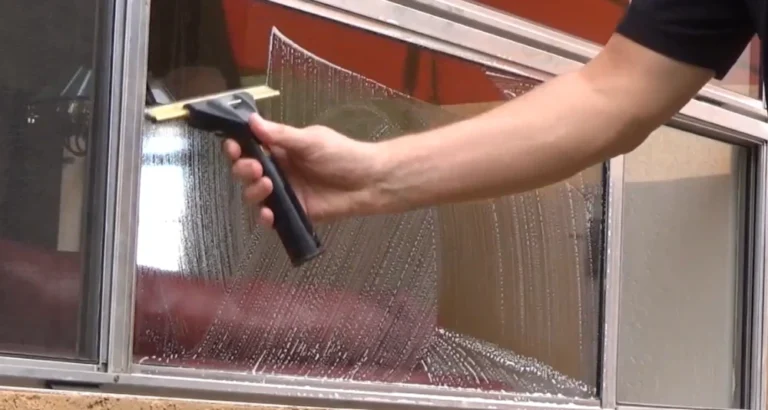
Myth 3: “It’s just dust — I can wipe it off.” Fine desert silica at 60 mph embeds in the microscopic surface structure of glass. Wiping with a dry cloth or paper towel drags those particles across the surface, creating fine scratches visible in raking light. Always use a wet, professional-grade cleaning approach after a major wind event.
When to Call for Post-Santa-Ana Cleaning in San Clemente
The window (no pun intended) for effective post-event cleaning is roughly two to three weeks. Before that point, the deposit is still loose enough for standard professional cleaning to remove completely. After three weeks of marine layer rehydration cycles, the deposit begins chemically bonding to the glass and may require a deeper acid treatment.
For Talega and Forster Ranch homeowners: we recommend scheduling within 10–14 days of any event that coats your windows with visible grey or brown film. For coastal homeowners in Pier Bowl and North Beach: a post-Santa-Ana clean can usually be combined with your regular 6–8 week marine layer clean without rushing.
What is the best way to clean windows after Santa Ana winds in San Clemente?
Use a professional window cleaner with TDS-verified purified water within 2–3 weeks of a major event. Do not dry-wipe — the abrasive silica particles will scratch the glass. For homes near the Ortega Canyon corridor (Talega, Forster Ranch), post-event cleaning is protective maintenance, not cosmetic. Ash deposits require removal before the next marine layer cycle rehydrates them and begins etching the glass surface.
After a Santa Ana event in San Clemente, the clock starts on glass damage. We schedule post-wind cleans for Talega, Forster Ranch, and Rancho San Clemente homeowners within 10–14 days — before ash and desert minerals bond to your glass. Call (949) 387-4521 or fill in your neighbourhood below.
📞 Schedule Post-Santa-Ana CleaningSan Clemente Area Guides
Window cleaning needs vary significantly across San Clemente neighbourhoods. See our area-specific guides:
What Santa Ana Winds Actually Do to San Clemente Glass
Santa Ana winds deposit two types of contamination on San Clemente glass that require different treatment approaches. The first is alkaline dust — a fine-particle silicate and carbonate mixture carried from the Mojave Desert and Ortega Canyon that settles on horizontal and slightly-angled glass surfaces. This dust is alkaline (pH 8–10) and when it combines with existing salt film or humidity, it creates a composite deposit that resists standard cleaning chemistry. The second contamination type from Santa Ana events is ash — from brush fires that frequently accompany the wind events. Ash is hydrophilic and bonds aggressively to glass surfaces, creating dark staining that is distinct from salt film and requires different pre-treatment.
The combination of alkaline dust and ash on glass that already has a base layer of salt film creates a multi-layer contamination that professional cleaning needs to address in sequence — not all at once with a single chemical. We pre-soak Santa Ana contamination with a surfactant appropriate to the primary deposit type (alkaline neutraliser for dust-heavy contamination, degreaser for ash-heavy contamination) before standard cleaning. Attempting to squeegee Santa Ana contamination without pre-soaking risks scratching the glass — the fine silicate particles in desert dust act as a mild abrasive when dragged across glass under squeegee pressure.
When to Clean After a Santa Ana Event
The optimal window for cleaning after a Santa Ana wind event in San Clemente is 5–10 days after the wind stops. Immediately after the event, glass contamination is heavy and may include still-mobile particles that will redistribute during cleaning. By day 5, the contamination has settled and can be assessed and treated correctly. By day 14, alkaline dust begins secondary bonding with the glass silica surface — still cleanable, but requiring longer dwell time on the pre-soak and potentially a second pass. Beyond day 21 of a heavy Santa Ana event, some of the contamination may have bonded sufficiently to require acid treatment in addition to standard cleaning.
The practical recommendation: if you live in Talega, Forster Ranch, Rancho San Clemente or anywhere in the eastern San Clemente hillsides, schedule a window clean within 10 days of any Santa Ana event that deposits visible dust or discolouration on outdoor surfaces. Call (949) 387-4521 — we prioritise post-Santa-Ana appointments in the affected areas and can typically schedule within 3–5 business days.
Santa Ana Wind Events — Timing Your Window Clean Correctly
The timing of window cleaning around Santa Ana events matters more than many San Clemente homeowners realise. Cleaning glass during a Santa Ana wind event is counterproductive — the alkaline dust being deposited is still active, and a clean during the event simply removes one layer of dust while the next is being deposited. The correct timing is to wait until the wind event fully subsides — typically 24–48 hours after wind speeds drop below 20 mph at the coast — then clean within the following 7–10 days before the deposits harden.
Santa Ana dust is alkaline (high pH) because it originates in the decomposed granite soils of the inland mountain ranges and picks up ash from the dry brush along the Ortega Corridor. This alkalinity causes it to bond more aggressively to glass surfaces that have existing salt film — the two contamination types combine chemically and the composite deposit is significantly harder to remove than either alone. This is why a Santa Ana event on top of a 6-week-old salt film produces glass that appears to need acid treatment when a simple professional clean would have been sufficient if the salt film had been removed first.
Which San Clemente Neighbourhoods Are Most Affected by Santa Anas
Santa Ana wind direction is typically north-east to south-west as the Ortega Canyon funnels air from the inland desert to the coast. This means Talega and Forster Ranch — positioned at the inland approaches to the canyon — receive the highest dust loads. Rancho San Clemente and the hillside communities (Marblehead, Riviera District) receive moderate loads as the wind descends from the canyon. Coastal communities (Pier Bowl, North Beach, Cyprus Shore) receive lighter dust loads but are simultaneously accumulating maximum salt aerosol in the dry, warm Santa Ana conditions — the absence of marine layer moisture during these events temporarily reduces salt bonding but the salt concentration in the aerosol is unchanged. Post-Santa-Ana cleaning in coastal communities should address both the dust deposit and the accumulated salt film from the preceding weeks.
Post-Santa-Ana Cleaning — What the Service Includes
Our post-Santa-Ana service includes surfactant pre-soak on all affected elevations to soften the alkaline dust deposit before cleaning, followed by standard purified water cleaning. For properties where Santa Ana dust has landed on top of an existing salt or mineral layer, we assess whether acid treatment is needed to dissolve the composite deposit. We can typically fit post-Santa-Ana priority cleans within 5–7 business days of any significant event. Call (949) 387-4521 to book a post-event priority clean.