Our Window Cleaning Process — Every Step, Explained
Most window cleaners show up, spray something, squeegee, and leave. We do six specific steps — in a specific order — because coastal glass in San Clemente demands it. Here’s exactly what happens on every visit.
📞 Book a Visit — (949) 387-4521Coastal Glass Doesn’t Forgive Shortcuts
San Clemente sits at the intersection of Pacific salt aerosol, mineral-rich municipal water, and marine layer humidity that keeps every contaminant chemically active 24 hours a day. A standard window cleaning routine — the kind that works fine in Irvine or Mission Viejo — leaves enough residue behind to accelerate the damage it’s supposed to prevent.
Every step in our process exists for a specific reason tied to coastal chemistry. Skip screen cleaning, and salt-crusted screens recontaminate the freshly washed glass within days. Use tap water, and you’re depositing the same calcium and magnesium you’re trying to remove. Rush the inspection, and you miss the etching that no future cleaning will fix. The sequence matters as much as the steps themselves.
What does a professional window cleaning process include for San Clemente coastal homes?
A complete coastal window cleaning process for San Clemente homes includes six steps: (1) pre-job damage assessment — every window inspected before water touches glass; (2) screen removal and washing with purified water; (3) frame and track pre-cleaning in inverted-U sequence; (4) glass washing using S-technique squeegee; (5) TDS-verified purified water rinse (RO + deionization, below 10 ppm); and (6) oblique-angle final inspection at 60° to catch salt-crystal halos, followed by screen reinstallation. Each step prevents recontamination of the previous one — the sequence is as important as the individual techniques.
What Happens on Every Visit — In Exact Order
Pre-Job Damage Assessment
Before a drop of water touches your glass, every window gets a close-range inspection. I’m checking for five specific things:
- Salt-crystal deposit fields — visible at oblique angles as sparkly white specks or evaporation ring halos
- Hard water mineral staining — chalky white deposits from irrigation overspray that require acid treatment, not standard cleaning
- Early-stage chemical etching — matte or frosted haze that doesn’t improve when wet, indicating silica damage already in progress
- Failed double-pane seals — cloudiness between panes that no exterior cleaning can address
- Frame and screen corrosion — especially on aluminum frames in direct ocean-facing positions
I tell you honestly what I find — including what the cleaning can’t fix — before you’ve committed to the job. If windows have etching I can’t reverse, or mineral deposits that need separate acid treatment, you know that upfront. No surprises on the invoice.
⏱ 5–10 min · Every window · Before any water contactScreen Removal & Separate Washing
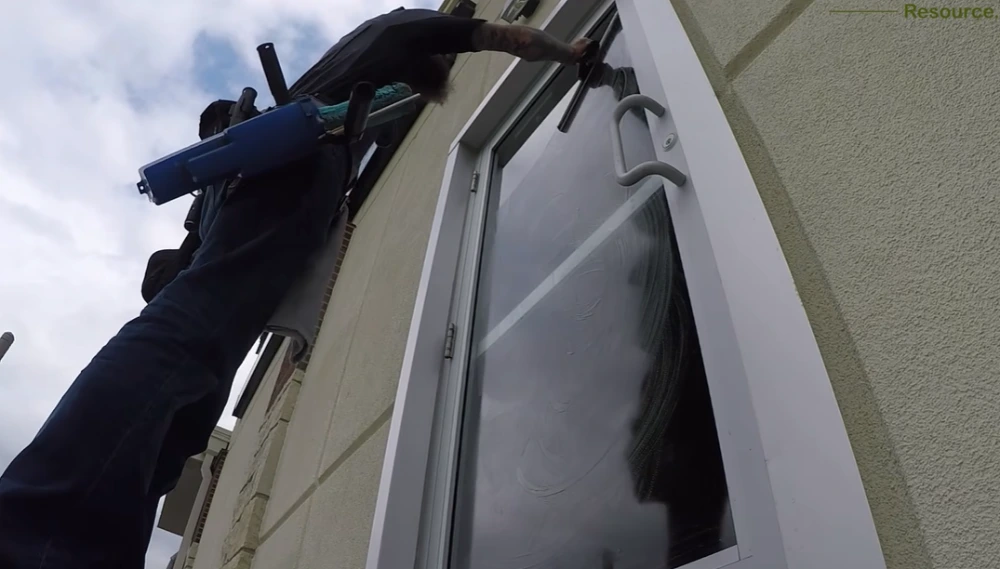
Screens come off before anything else — always, without exception. This step is the one most window cleaners skip or rush, and it’s the reason their results don’t last.
In San Clemente’s coastal environment, screen mesh traps salt aerosol particles continuously. A screen that looks clean is typically carrying enough salt to recontaminate freshly washed glass within 48–72 hours once reinstalled. If we clean the glass and skip the screens, we’ve essentially set a timer on how long the clean lasts.
Each screen is removed carefully, labeled if needed, and washed separately with purified water. While washing, I check the mesh for tears (which allow insects through and look bad on inspection) and the frame for corrosion or bent sections. Corroded or damaged screens are flagged — not hidden.
🔲 All screens removed · Purified water wash · Inspected before reinstallFrame, Track & Sill Pre-Cleaning
Frames, tracks, and sills get cleaned before the glass — not after. The sequence is deliberate: if you clean the glass first and then wipe the frames, you’re dragging frame debris across already-clean glass and leaving microfiber residue that catches salt.
Frames are wiped in an inverted-U sequence — two sides first, then the top — so debris falls away from the cleaned area. Tracks are cleared of compacted mineral deposits and salt-corrosion buildup that accumulates in the grooves. This buildup is what causes windows to stick when you try to open them and what accelerates seal failure on double-pane units.
Sills are cleared and wiped down. On ocean-facing windows, the sill often shows the fastest mineral accumulation — it’s a useful diagnostic for how aggressively the salt aerosol is hitting that side of the house.
🔩 Inverted-U sequence · Tracks cleared · Sills wipedGlass Wash — S-Technique Squeegee
The glass wash uses S-technique squeegee — the blade stays in contact with the glass continuously throughout each stroke, never lifting mid-pane. Lifting the blade mid-stroke creates drag marks. The S-pattern covers the full pane in overlapping passes without losing contact.
Water within a finger-width of the frame edge gets microfiber detail work. The frame-edge zone is where most streaks originate — the squeegee can’t reach it cleanly, so it needs deliberate hand work with a damp microfiber that’s wrung dry enough not to leave residue.
For interior glass, a separate, dedicated microfiber system is used — never the same tools as exterior. Interior glass accumulates different contaminants (dust, cooking residue, HVAC particulate) and needs a cleaner approach to avoid smearing exterior salt film indoors.
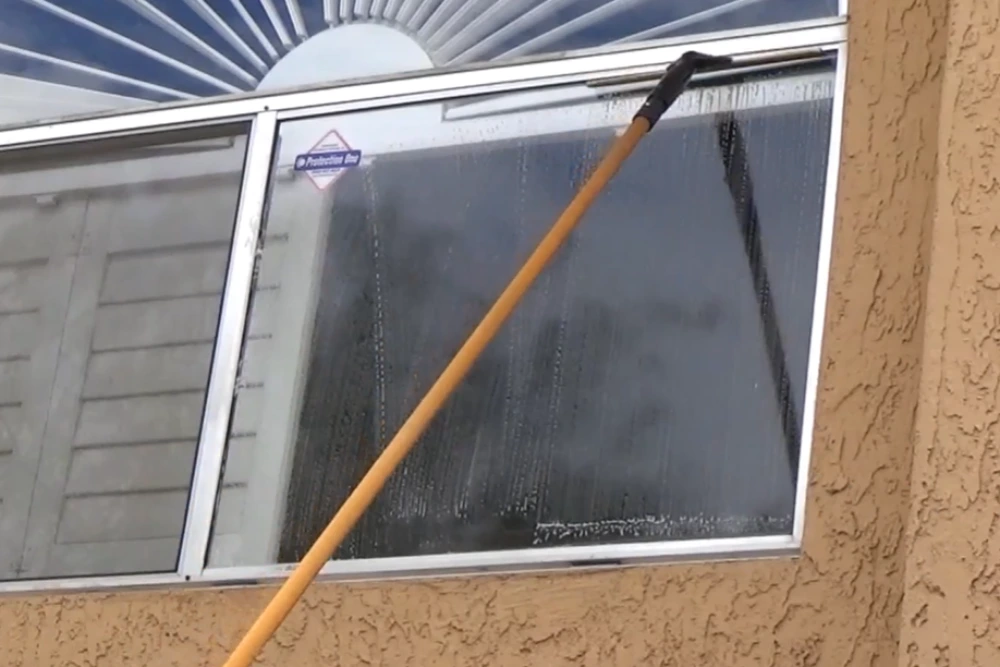
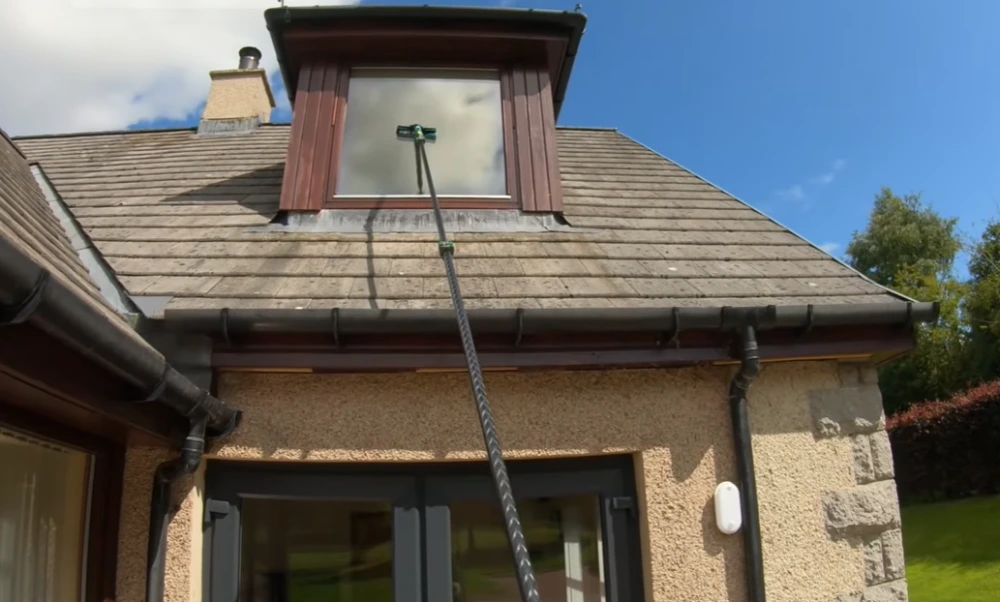
Second-story and elevated exterior glass is handled via water-fed extension pole — the same purified water system, applied from the ground. No ladder contact with tile roofs or stucco walls, and streak-free results without squeegee access.
🪟 S-technique · Finger-width edge detail · Water-fed pole for upper floorsTDS-Verified Purified Water Final Rinse
Every exterior glass surface gets a final rinse with purified water from a Tucker Pure Water System using dual-stage filtration: reverse osmosis followed by deionization. Before every job, the output water is tested with a TDS (total dissolved solids) meter and must read below 10 ppm — typically 0–3 ppm in practice.
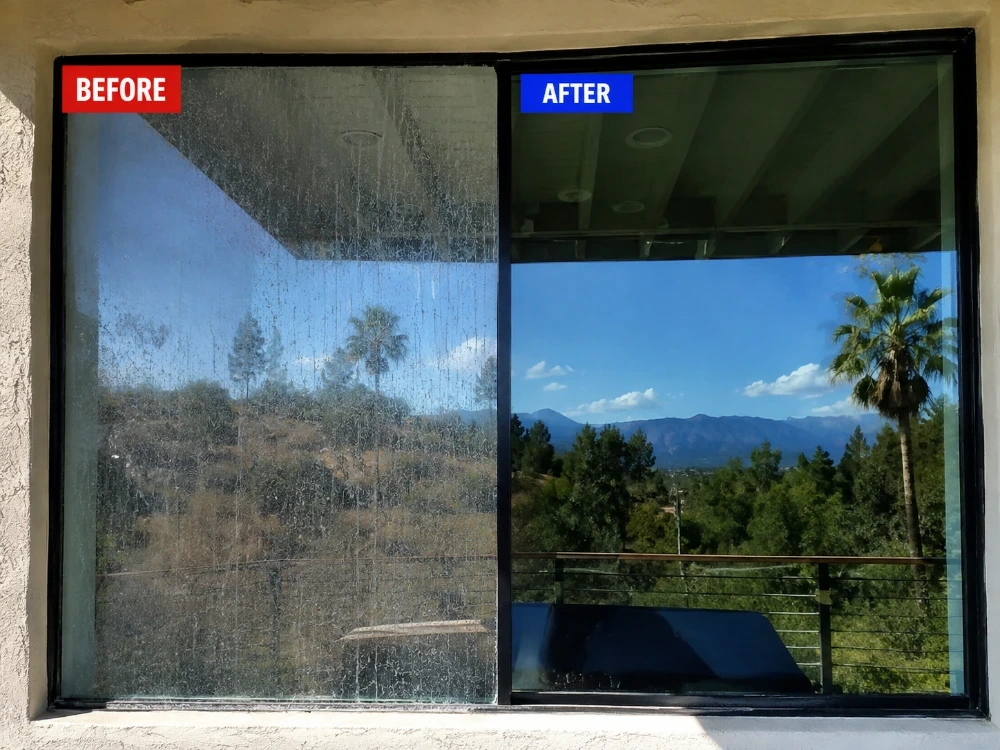
Why does this matter? San Clemente municipal water carries 200–350 mg/L of dissolved calcium and magnesium carbonates. When tap water evaporates off glass, those minerals stay behind as white carbonate deposits — exactly the problem we’re trying to prevent. Purified water at less than 10 ppm TDS leaves essentially nothing behind as it evaporates. That’s the physical mechanism behind spot-free results, not a marketing claim.
The purified water rinse also picks up any remaining salt film that the squeegee pass loosened but didn’t fully remove, carrying it off the glass completely as the water sheers away.
💧 RO + Deionization · <10 ppm TDS tested every job · Zero mineral residueOblique-Angle Final Inspection & Screen Reinstall
Every pane is checked at approximately 60 degrees in direct light before screens go back on. This oblique angle is the only viewing position that reveals salt-crystal halos — the thin evaporation rings left by salt droplets that dried on the glass. Straight-on inspection misses them entirely. If I find any, the pane gets a spot re-clean before the screen goes back.
Screens are reinstalled in the correct orientation (it’s easy to put them in upside down or backward — both affect fit and seal). Tracks get a final wipe. A walkthrough with you, if you’re home, to confirm everything looks right from inside and out.
If something isn’t right — and occasionally something isn’t — it gets corrected before I leave. If you notice an issue after I’ve gone, I return within a few days at no charge. The guarantee isn’t a marketing line: it’s the only way to maintain the kind of recurring client relationships this business runs on.
✅ 60° oblique check · Salt halos caught · Screens reinstalled · WalkthroughWhy do San Clemente windows need a different cleaning process than inland homes?
San Clemente windows accumulate four simultaneous contaminants that don’t exist at the same concentration anywhere inland: Pacific salt aerosol (which is hygroscopic — it absorbs moisture and stays chemically active on glass rather than drying out), marine layer humidity (which keeps salt film reactive overnight), calcium and magnesium carbonates from mineral-heavy municipal irrigation water, and Santa Ana wind-blown desert dust that bonds into the salt-mineral compound every fall. Standard inland cleaning techniques — tap water, basic squeegee, optional screen cleaning — leave enough residue to accelerate the chemical damage they’re supposed to interrupt. TDS-verified purified water, mandatory screen removal, and oblique-angle inspection aren’t add-ons; they’re the baseline for coastal glass maintenance that actually protects the glass.
The Coastal Chemistry Behind the Process
Every step in this sequence addresses a specific failure mode that degrades San Clemente glass. Here’s the direct connection between the science and the work:
Pre-Job Inspection
Prevents wasting your money cleaning glass that’s already permanently etched — and gives you honest information before you commit. Also identifies hard water deposits that require acid chemistry rather than standard cleaning.
Screen Removal
Salt-crusted screens act as a continuous salt reservoir. Reinstalling them over clean glass means the next rain or marine layer event washes salt from the screen directly onto the freshly cleaned pane. Skipping this step cuts result longevity by 60–70%.
Frame-First Sequence
Frames and tracks cleaned after glass = frame debris on clean glass. The inverted-U sequence ensures dirt falls away from the cleaned surface. Track clearing prevents the mineral buildup that makes windows stick and causes seal failure.
S-Technique Squeegee
The blade-on-glass continuous contact technique eliminates drag marks from lift-and-reset squeegee strokes. Edge detailing catches the zone the squeegee blade can’t reach cleanly — where most visible streaks originate on a standard clean.
Purified Water Rinse
Municipal tap water in San Clemente carries 200–350 mg/L dissolved minerals. Every tap-water rinse deposits a fresh mineral layer as it evaporates. Purified water below 10 ppm TDS leaves zero residue — it’s physically incapable of leaving spots.
Oblique-Angle Check
Salt-crystal halos — the thin evaporation rings from salt droplets — are invisible from straight on but clearly visible at 60°. Missing them means re-contamination from the screen reinstall drives them into the glass surface on the next heating cycle.
What We Use and Why
Tucker Pure Water System
Dual-stage RO + deionization. Output tested to <10 ppm TDS before every job. Water-fed pole delivers purified water directly to upper-story glass from the ground.
TDS Meter
Handheld digital meter tested before each job. If the reading is above 10 ppm, we don’t start. This is the quality control step that separates genuine purified water from a marketing claim.
Ettore & Unger Squeegees
Professional-grade rubber blades replaced frequently. Salt film is abrasive — a worn blade leaves micro-drag marks. Fresh rubber, correct tension, correct channel size for each pane width.
Lint-Free Microfiber System
Separate microfiber sets for interior and exterior. Interior cloths are clean-room grade — no cross-contamination from exterior salt. Replaced between jobs, not washed on-site.
Inspection Light & Technique
Direct light source used at 60° oblique angle for final check. A phone flashlight held at the right angle reveals salt halos and micro-streaks invisible in ambient light. Simple but essential.
Acid Treatment Kit
Dilute oxalic acid solution for calcium carbonate hard water deposits. Applied selectively, controlled dwell time, purified water neutralization rinse. For deposits that standard cleaning literally cannot touch.
How Our Process Differs from a Standard Window Clean
| Step | Standard Cleaner | Our Coastal Process |
|---|---|---|
| Pre-job inspection | ✕ Skipped — job starts immediately | ✓ Every window assessed before water contact |
| Screen cleaning | ✕ Optional or skipped — wastes the clean | ✓ Always removed, washed, inspected, reinstalled |
| Frame/track sequence | ✕ After glass — drags debris across clean pane | ✓ Before glass — inverted-U sequence |
| Water used | ✕ Tap water — deposits 200–350 mg/L minerals | ✓ Purified <10 ppm TDS — zero residue |
| Final inspection | ✕ Straight-on glance — misses salt halos | ✓ 60° oblique in direct light — catches everything |
| Hard water deposits | ✕ Cleaned around — unchanged visit after visit | ✓ Acid treatment quoted and applied when confirmed |
| Etching disclosure | ✕ Often not mentioned — or blamed on prior cleaner | ✓ Honest pre-job assessment — you know before committing |
Process FAQ
See the Process in Person — Book a Visit
Tell me your neighborhood and home type. I’ll give you a real quote and explain exactly what the first visit will involve based on your specific exposure level and when the glass was last professionally cleaned.
Licensed · Insured · CSLB #1089234 · Owner on every job · 302 N El Camino Real, San Clemente CA 92672
Related Pages
- Window Cleaning San Clemente, CA — full service overview
- Window Washing San Clemente — our washing service
- Salt Air & Hard Water Window Damage — The Complete Guide
- How Often to Clean Windows in San Clemente — neighborhood intervals
- Residential Window Cleaning
THE WORK IN ACTION